How to choose the right cut of beef
Not all cuts are created equal. Here are some pointers to make sure you pick the right cut for a delicious meal, every time. In addition to the actual cut, you also want to consider things like Marbling, Color, Aging and Production Method (Grass-finished, Natural, etc.).
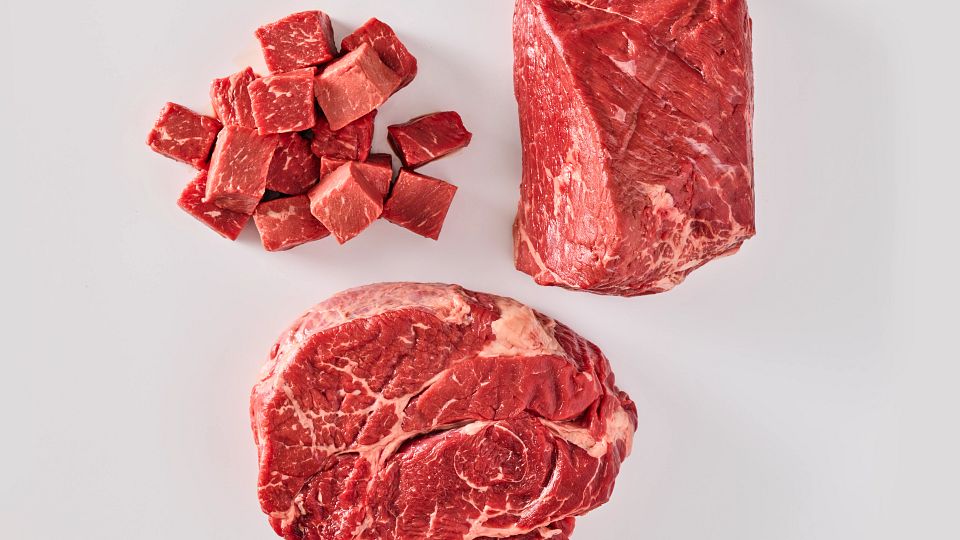
Learn the cuts of beef
Whether you're looking for a leaner cut for a weeknight dinner or a large, more marbled cut for your holiday gathering, our cut collections provide you with everything you need to choose the perfect cut at the meat case.
Marbling
Is the white fat that is interspersed within the lean muscle?
Sometimes, especially in grass-finished beef, the fat can appear more yellow in color due to the animal's diet prior to harvesting. While super-lean cuts provide a great option for those individuals requiring a low-fat diet regimen, it's also important to recognize that marbling greatly affects flavor. That is why the degree of marbling is one of the primary determinants in quality grade.
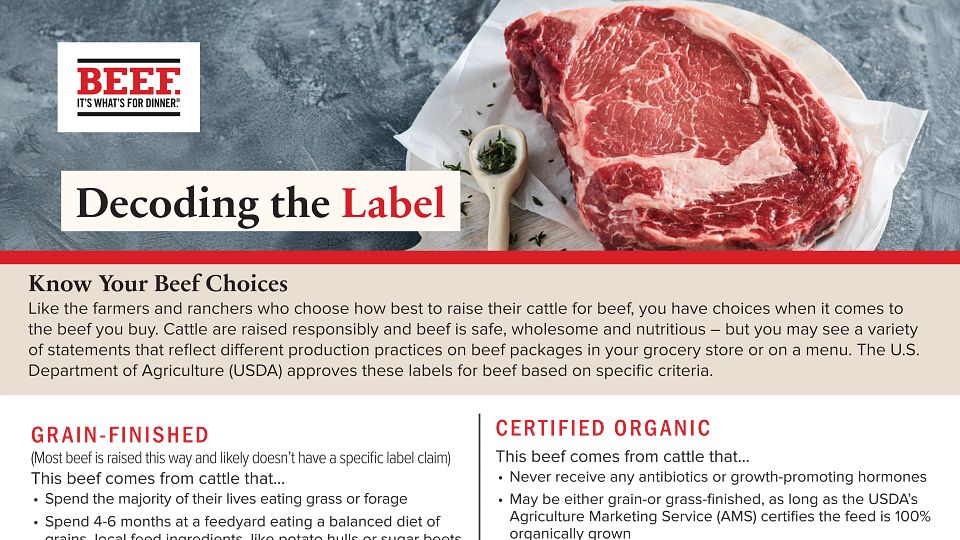
Decoding the Label: Know Your Beef Choices
Grain-finished, Grass-Finished, Conventional, Natural, or Organic? Prime, Choice, or Select?
Do you really know the difference between these labels? Are you sure? This guide will help you ask your meat manager, local farmer, or butcher the right questions to get the beef you want to feed your family.
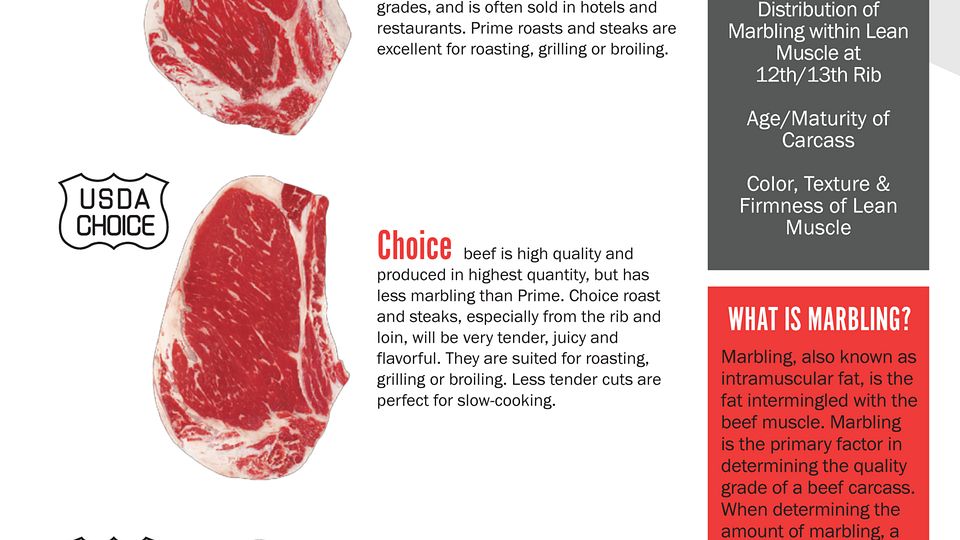
Understanding Beef Quality Grades
Beef grading sets the standards for the various quality levels of beef. The beef grading program uses highly trained specialists and sometimes grading instruments to determine the official quality grade. Beef quality grading is voluntary and administered by the USDA and paid for by beef packers.
So where does this leave you? In the grocery store, you'll see quality grades printed on the label. Prime is the top-tier for expected palatability, Choice is most common, and Select is the leanest option available in (some) groceries stores.
What if I am buying from a local source that doesn't have quality grade?
All beef in Virginia needs to be harvested in an inspected plant or facility. However, it may be state-inspected instead of federally-inspected. In this case, beef is inspected for quality and safety, but not for quality grade. You can use the guide above to help you make a purchasing decision.
Please also note, grass-finished beef tends to be leaner and it may be difficult to find grass-fed-and-finished beef that has moderate or abundant marbling. This will also affect the way you cook it for maximum flavor, so be sure to ask your source for recommendations.
Color
The color of the meat should be bright, cherry red. But remember, beef does brown as it is exposed to air.
If you store beef in a Ziploc or other plastic bag with a small hole, you will notice it browns quickly in your fridge. While it does not mean the meat has spoiled, you should always throw it out when in doubt.
Alternatively, if you buy vacuum-packaged meat, it may appear darker than normal. This is not a flaw with the meat, but rather a lack of oxygen passing through the packaging. The packaging is what allows it to stay fresh in your fridge longer than the standard styrofoam and cellophane packaging.
Aged Beef
Beef aging does not pertain to the age of the cattle but instead refers to the amount of time the meat has been stored and refrigerated after slaughter. Aging beef involves storing meat at refrigerated temperatures to enhance tenderness and flavor. Nearly all beef sold is aged in some way, but this may not be the case if you are buying locally. Make sure to ask your butcher or farmer to find out for sure.
There are two choices for aging beef, wet and dry aging:
Wet Aging
Wet aging includes storing meat in sealed, airtight bags under refrigeration (32°F to 34°F) up to 3 weeks or 21 days.
Wet aging results in traditional beef flavor and is the most common aging method.
Dry Aging
Dry aging is less common than wet aging due to the complexity and cost. Beef is stored uncovered in a refrigerated room (32°F to 34°F) under controlled humidity and air flow for up to 4 weeks. Dry aging results in distinctive brown-roasted beefy flavor.