How to buy beef locally
A guide to freezer beef
Beef 101: Freezing & Thawing Basics. Credit: Beef. It's What's For Dinner.
How much freezer space do I need according to beef quantity?
Recommended storage times according to beef cut type? (from purchase date)
Refrigerator defrost times according to beef cut type? (35-40°F)
For the best quality, defrost beef in the
refrigerator, never at room temperature.
Place the frozen package on a plate or tray
to catch any juices, and place it in the
refrigerator according to the chart below.
How much beef am I buying?
Always keep in mind that there are many variables that affect the amount of edible product from cattle - no two animals are the same. On average 60-63% of a live beef animal’s weight will be converted to carcass weight, which is known as the dressing percentage that varies depending on many factors, including but not limited to breed type, age, fat and muscling. The weight of the carcass directly after slaughter is often referred to as the “hot carcass weight” or “hanging weight.”
Beef carcasses are often chilled
for 14-21 days before being cut
into retail cuts, a process known
as aging.
Aging aids in the development of
beef flavor and tenderness.
During this process, the carcass
will lose a small amount of
weight (on average 5-7%) due to
water evaporation and additional
trimming, which is reffered to as
“cooler shrink.”
When the carcass is cut, a portion
will be lost to inedible fat,
connective tissue and bone. This
portion differs on a variety of
factors (e.g., bone-in vs. boneless
cuts, and fat trim level). On
average, a customer can expect a
50-65% yield of edible product
from the aged carcass weight.
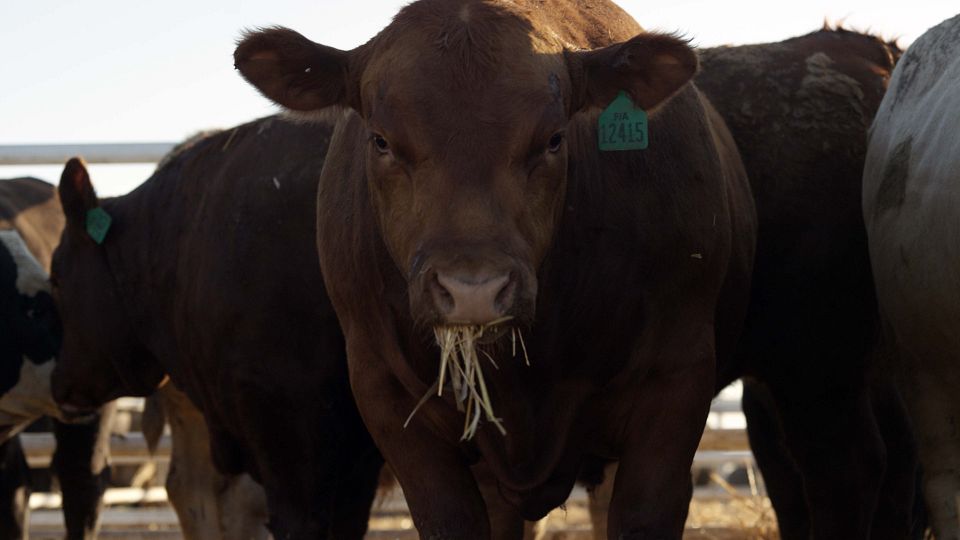
1. Steer
Example Weight: 1000 lbs
2. Carcass
62% of 1000 lbs = 620 lbs
3. Cooler Shrink
6% lost to aging of 620 lbs = 583 lbs
4. Edible Product
50-65% of 583 lbs - 292 to 379 lbs (retail cutting yield)
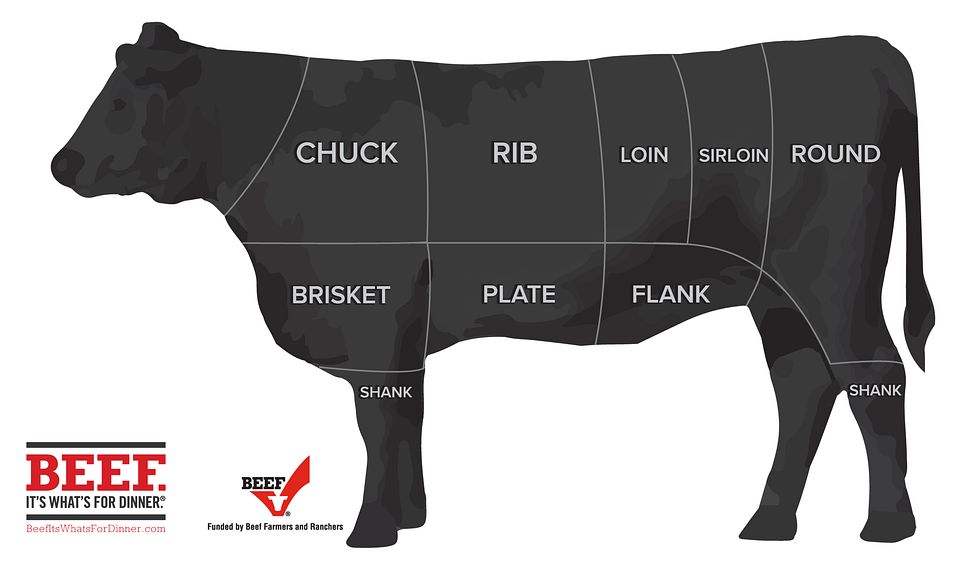
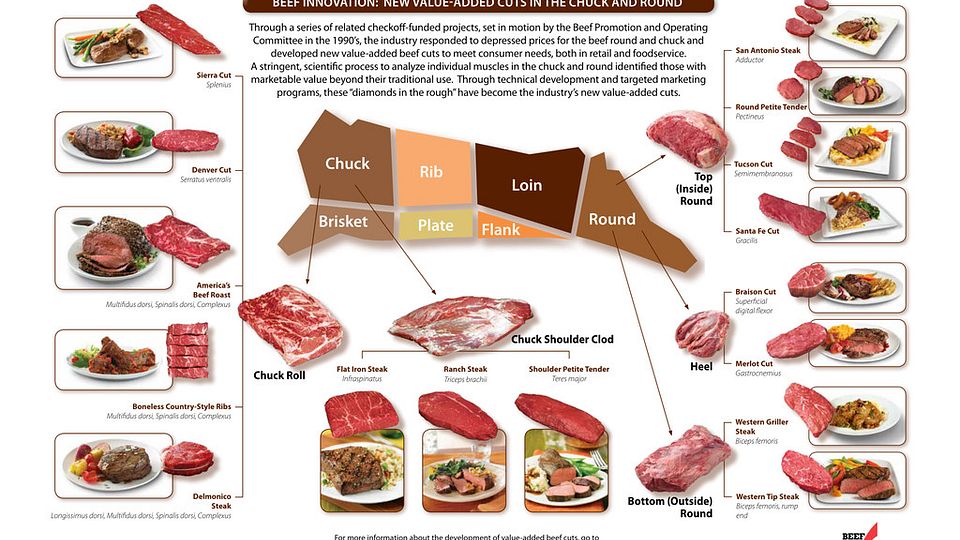
Primal Cuts
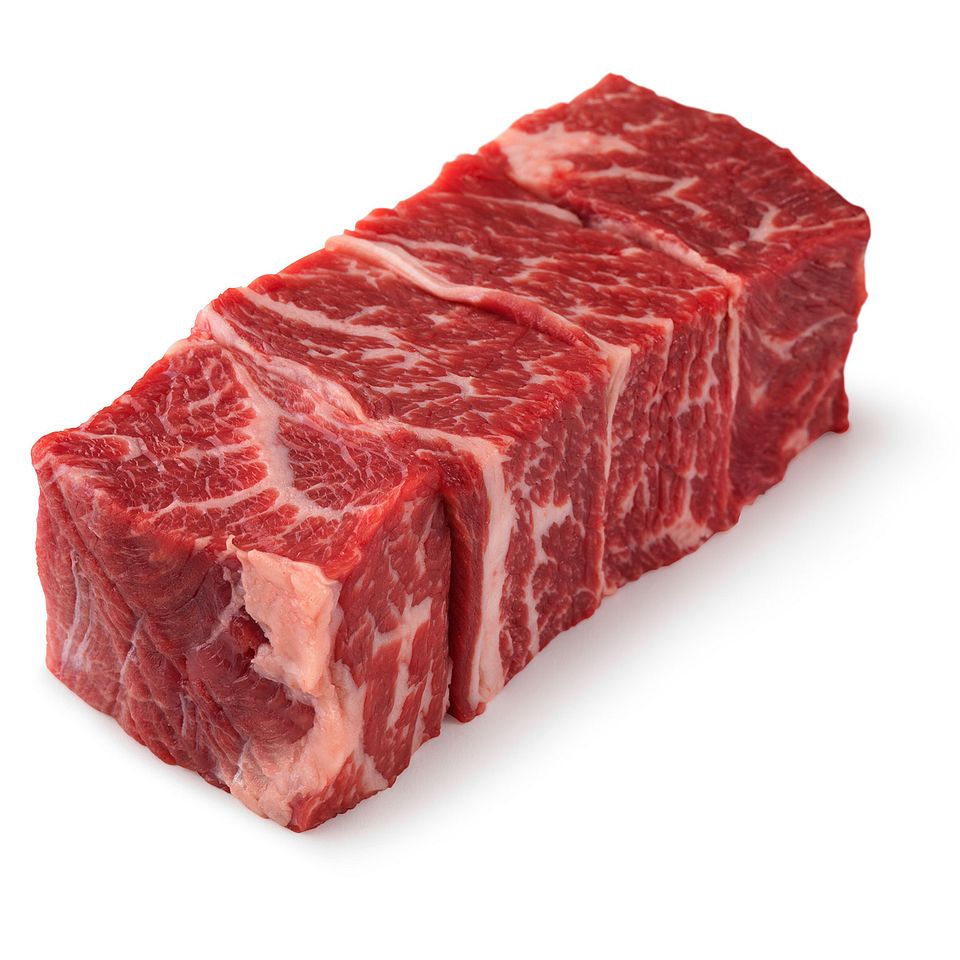
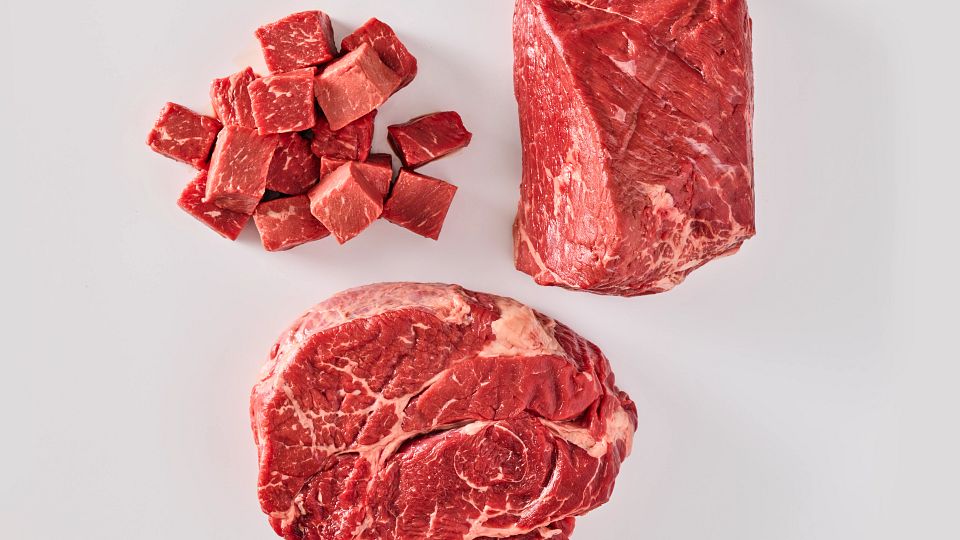
Chuck
29% of carcass
- Arm Chuck Roast
- 7 Bone Chuck Roast
- Chuck Eye Roast
- Petite Tender Roast
- Shoulder Roast
- Denver Steak
- Flat Iron Steak
- Top Blade Steak
- Country Style Ribs
- Ground Beef
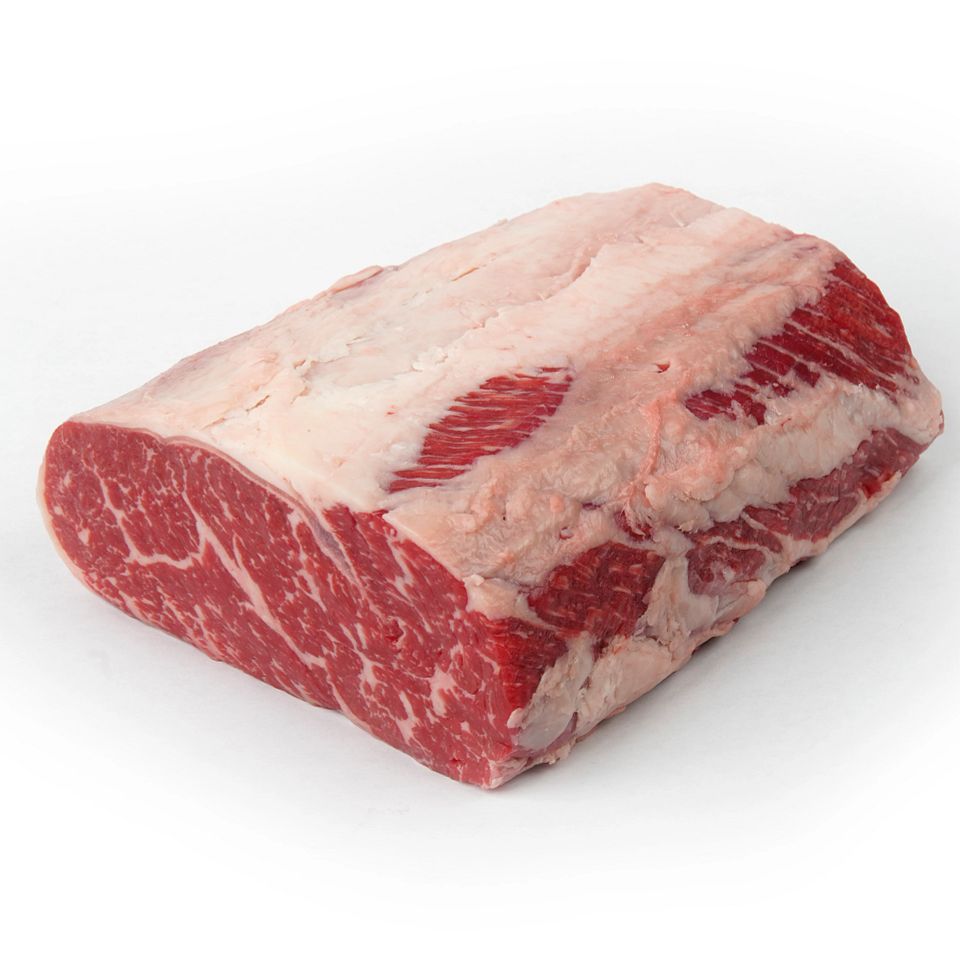
Rib
9% of carcass
- Ribeye Steaks/Roasts
- Prime Rib Roasts
- Ribeye Cap Steak
- Short Ribs
- Back Ribs
- Ground Beef
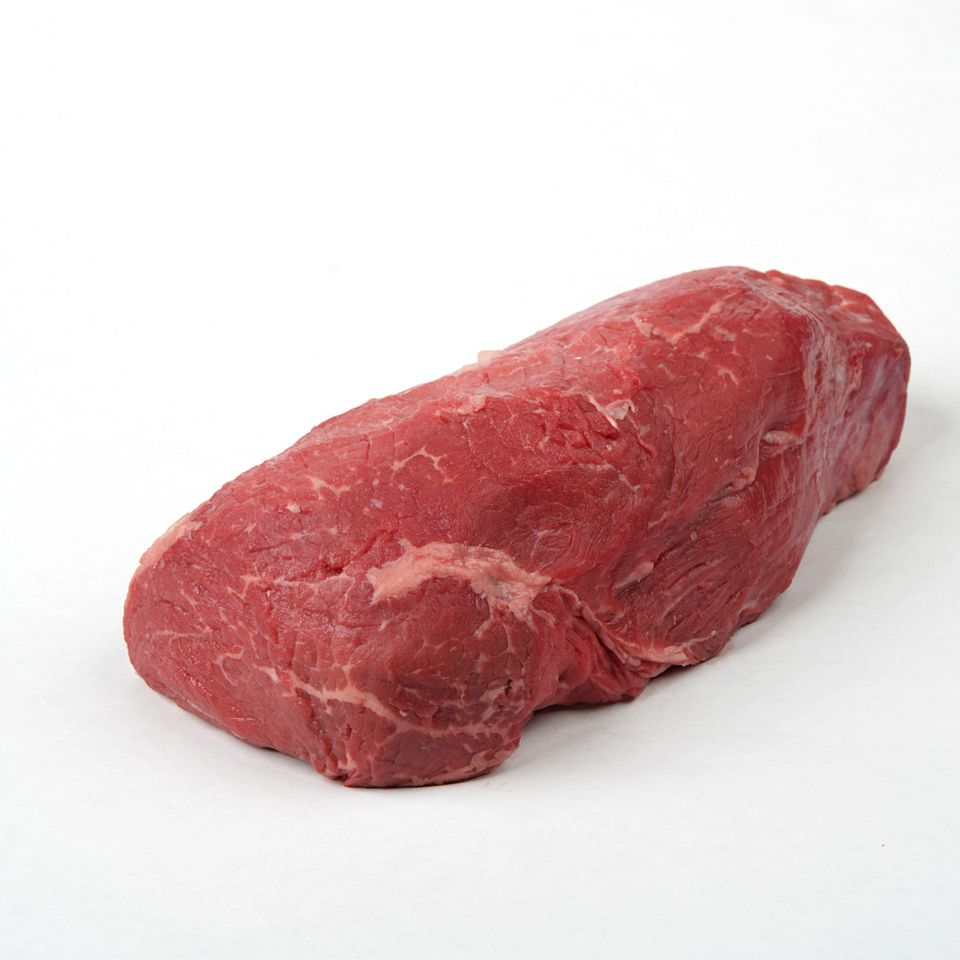
Loin
16% of carcass
- Tenderloin Steaks/Roast*
- Strip Loin Steaks/Roast*
- Top Sirloin Steaks/Roast
- Tri-Tip Steaks/Roast
- Sirloin Barette
- Coulotte Steaks
- T-Bone Steaks
- Porterhouse Steaks
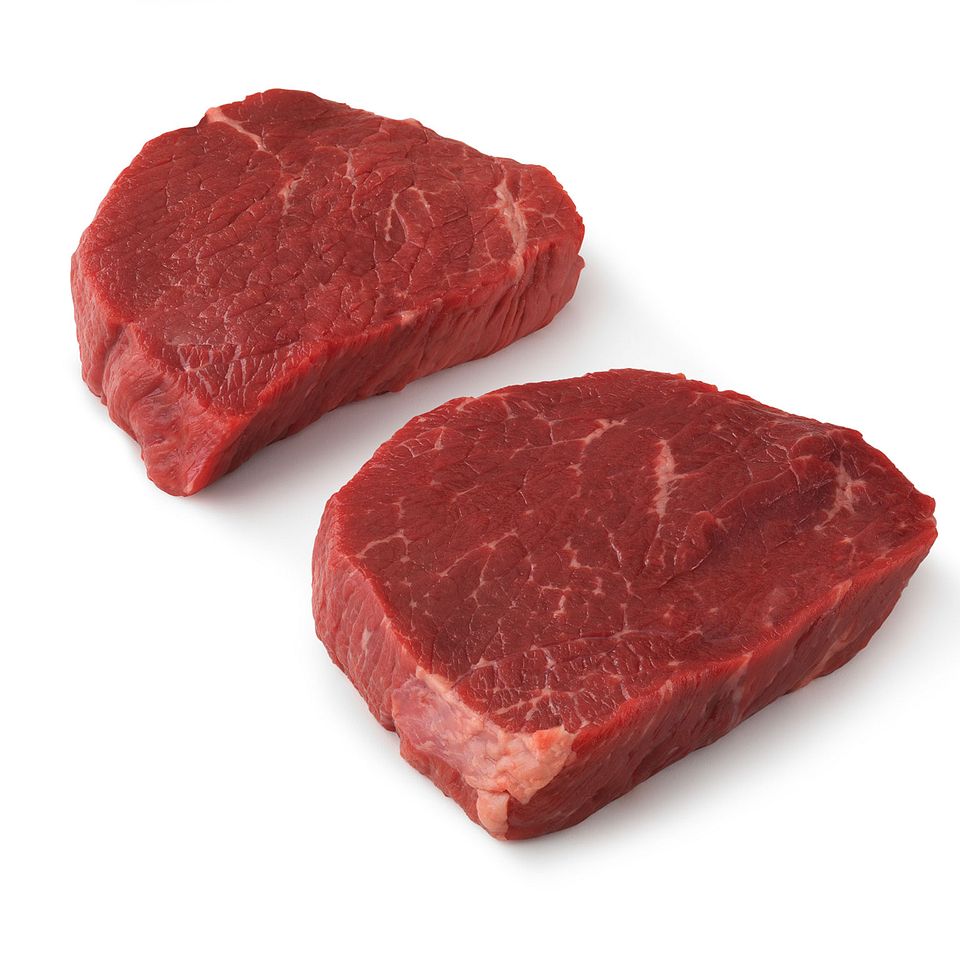
Round
22% of carcass
- Top Round Roast
- Bottom Round Roast
- Eye of Round Roast
- Rump Roast
- Cubed Steak
- Ground Beef
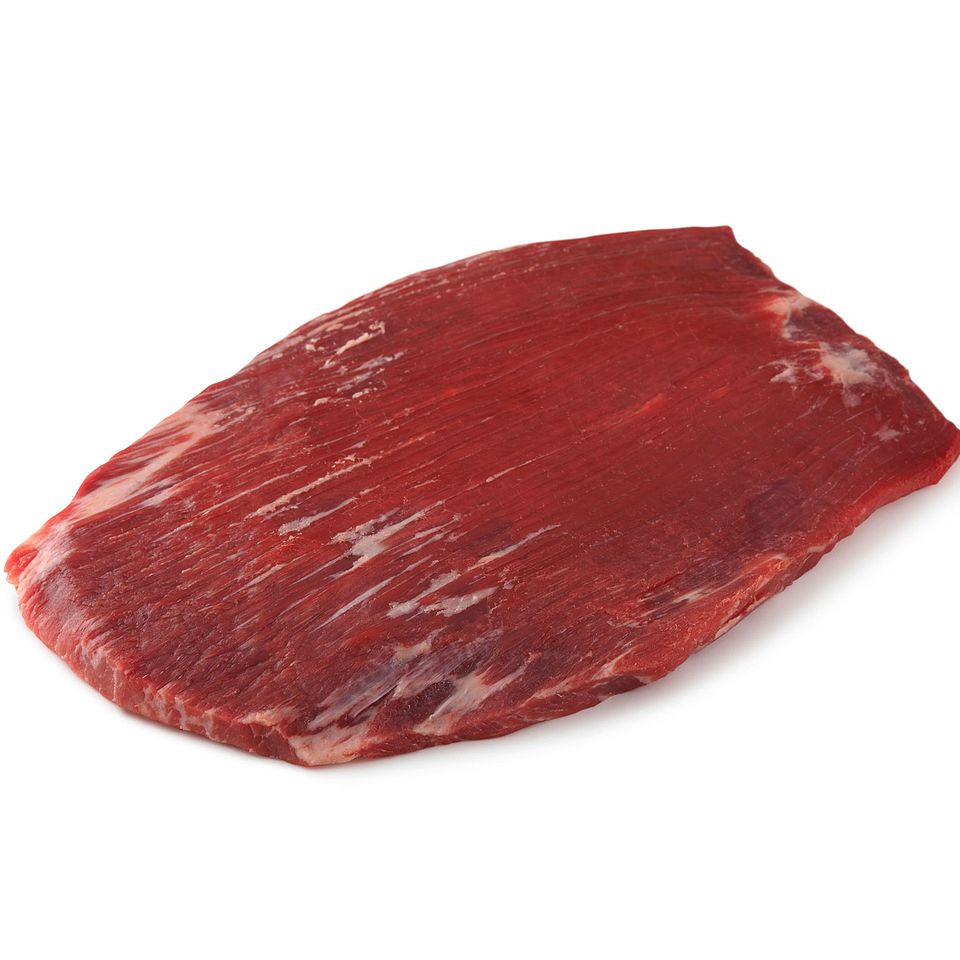
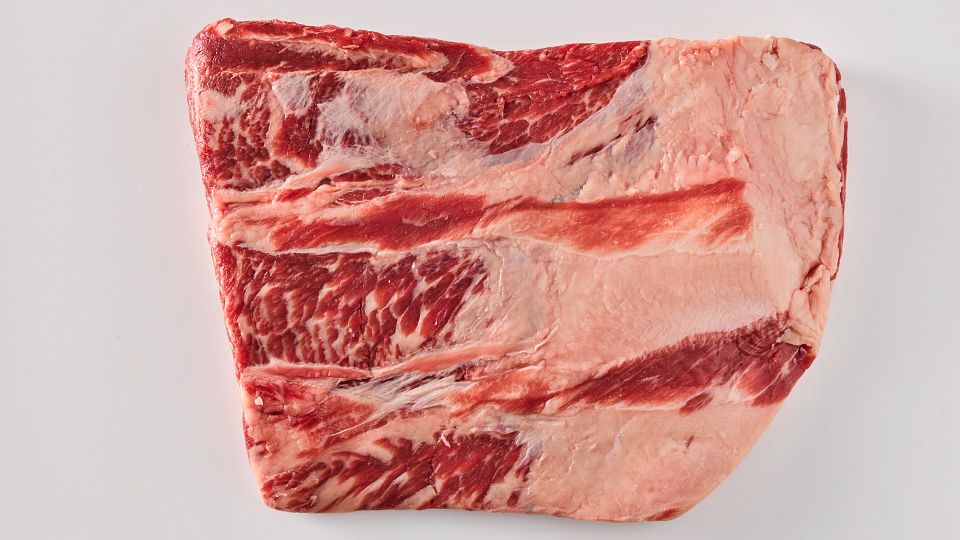
Thin Cuts
19% of carcass
- Flank Steak
- Inside Skirt Steak
- Outside Skirt Steak
- Brisket Flat & Point
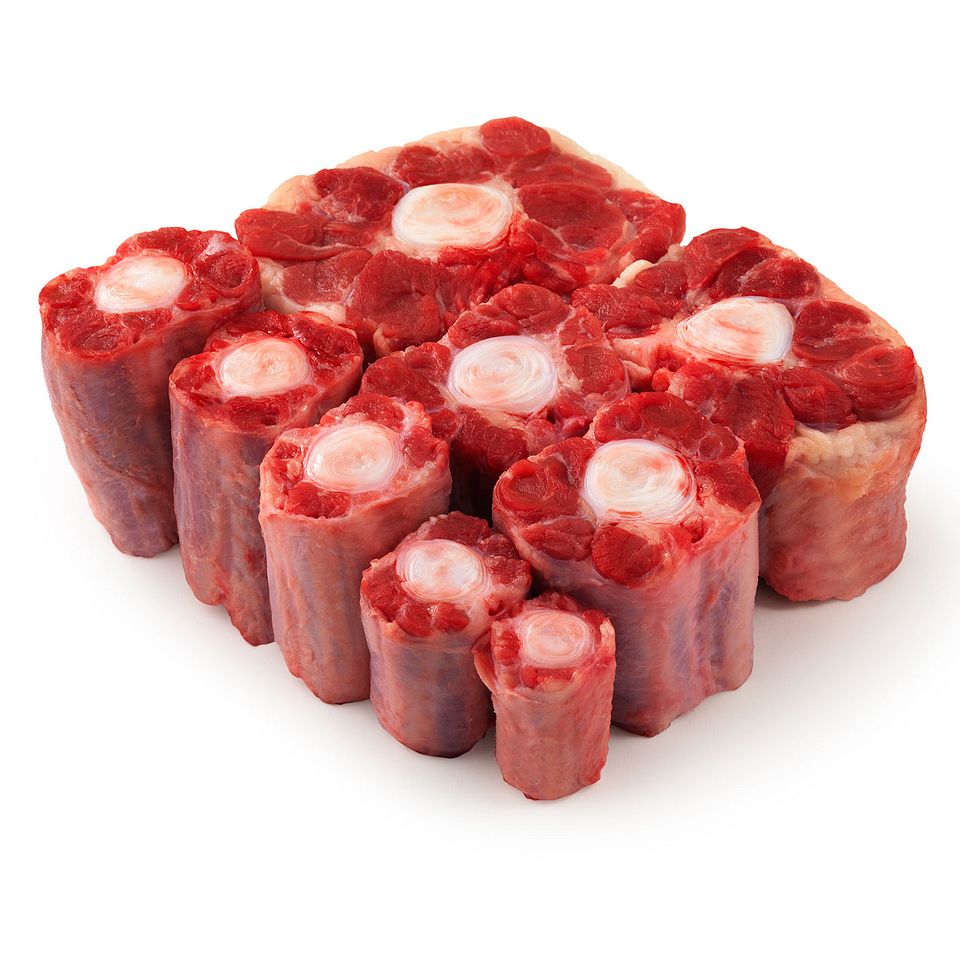
Miscellaneous
5% of carcass
- Oxtail
- Shank Cross-Cut
- Stew Meat
- Organ Meats**
* Tenderloin Steaks and Strip Steaks with the bone left in are T-Bone and
Porterhouse Steaks.
** Organ meats such as tongue, heart and liver can be saved, if desired.
1 www.beefitswhatsfordinner.com/cooking/food-safety
2 https://extension.okstate.edu/fact-sheets/custom-beef-processing-expected-yields
3 https://www.beefresearch.org/Media/BeefResearch/Docs/%20beefbreakdown_10-21-2020-33_1.pdf